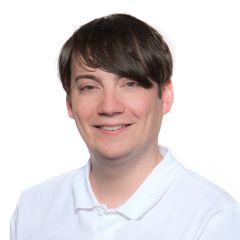
Dr. Alexander Quaas in conversation with a patient couple

Reproductive medicine and gynecological endocrinology

Reproductive medicine and gynecological endocrinology (RME) at the Women's Clinic offers you comprehensive advice, clarification and treatment in the following areas

  • desire to have children
  • andrology
  • Reproductive surgery
  • Urological operations
  • Hormone consultation
  • Fertility reserve for medical reasons
  • Social freezing
  • Sex therapy
  • Psychological support
  • and specialized and individual care for female athletes.

For us, you are the focus of our daily commitment: the most important goal is to care for all patients to their utmost satisfaction. Our highly qualified team offers individual care and treatment to the highest medical standards. Our treatment is always adapted to the latest scientific findings and is subject to strict ethical guidelines.

We recommend that you contact us using our contact form.

Haben Sie eine Frage oder ein Anliegen?

Wir unterstützen Sie sehr gerne. Kontaktieren Sie uns über unser Kontaktformular. Wie nehmen gerne so schnell wie möglich Kontakt mit Ihnen auf.

* Felder, welche mit einem * markiert sind, müssen ausgefüllt werden.

* Felder, welche mit einem * markiert sind, müssen ausgefüllt werden.

University Hospital Basel
Reproductive Medicine and Gynecologic Endocrinology (RME)
Vogesenstrasse 134
4031 Basel

Via the contact form

or

Phone: +41 61 265 93 37
Email address: reproendo@usb.ch

Telephone availability

Monday/Tuesday/Wednesday and Friday
7.30 - 12.00 and 13.30 - 16.00
Thursday
7.30 a.m. - 12.00 p.m.

From SBB station

  • Streetcar 1 (direction Dreirosenbrücke) to the stop Bahnhof St. Johann
  • Bus 50 (direction EuroAirport) to station Kannenfeldplatz, then streetcar 1 (direction Dreirosenbrücke) to stop Bahnhof St. Johann

From Badischer Bahnhof Basel

  • Bus 30 (direction Bahnhof SBB) to Johanniterbrücke stop, then streetcar 11 (direction St-Louis Grenze) to Voltaplatz stop

From EuroAirport

  • Bus 50 (direction Bahnhof SBB) to stop Kannenfeldplatz, thenTram 1 (direction Dreirosenbrücke) to stop Bahnhof St. Johann

Our institute is easily accessible by car. You can park for free in the parking garage right next to the institute. The parking spaces are located on the 2nd floor. An elevator takes you from there directly to our premises. Access from highway A2/A3

  • Drive in the direction of EuroAirport to the Basel-St. Johann exit
  • At Voltaplatz go straight on to the traffic circle
  • At the traffic circle, take the 6th exit and turn into Lothringerstrasse
  • Turn right into the first cross street (Gasstrasse)
  • Turn right into the first cross street (Vogesenstrasse)
  • Parking in the parking garage

Offer

In Western Europe, 8-15% of all couples are affected by involuntary childlessness. By definition, this means an unwanted pregnancy after 12 months or longer.

Despite the duration, there is still a realistic chance of spontaneous pregnancy. With increasing age and increasing duration of involuntary childlessness, this probability decreases. In order to become pregnant afterwards, supportive measures are then necessary.

Registration and contact

The fertility consultation takes place in the rooms of the Reproductive Medicine and Gynecological Endocrinology Department at Vogesenstrasse 134.

In order to avoid unnecessary clarifications, we ask you to bring copies of previous test results with you. If possible, ask your gynecologist for a summary of the examinations and treatments carried out so far.

In principle, the doctors in the fertility clinic see themselves as temporary substitutes for your gynecologist. Occasional telephone calls and regular correspondence ensure that you are kept informed about your current situation. If you are unsure, you can always get a second opinion.

The networking of the fertility clinic at the University Hospital also enables multidisciplinary care for special problems of involuntary childlessness. There is a regular professional exchange with specialists from other disciplines (medical genetics, endocrinology, urology, infectiology and specialists for tumor diseases, etc.).

Contact

Phone +41 61 265 93 37
E-mail: reproendo@usb.ch

Preimplantation genetic diagnosis is the genetic testing of embryos prior to transfer into the uterus for hereditary genetic changes or chromosomal abnormalities that could lead to impairments or diseases in the child.Preimplantation genetic diagnosis is only possible in the context of assisted reproduction (ICSI) with hormonal stimulation treatment.

In principle, a distinction is made between three different variants (PGT-M, PGT-A and PGT-SR), the application of which depends on the question posed by the respective genetic test.

PGT-M (PGT for monogenetic disorders)

In Switzerland, the revised Reproductive Medicine Act allows pre-implantation genetic diagnosis (PGT-M) to be carried out in families with known and genetically defined hereditary diseases. Only serious genetic diseases that cannot be treated in any other way or are unacceptable may be diagnosed, provided that the disease manifests itself by the age of 50 at the latest. Examples of such diseases are hereditary muscular dystrophies, cystic fibrosis (cystic fibrosis), Huntington's disease, BRCA mutation (breast cancer gene) and osteogenesis imperfecta.

PGT-SR (PGT for structural rearrangements)

This is a PGT for families who have a known hereditary chromosomal disorder. As a rule, one of the parents is a healthy carrier of a balanced translocation, which leads to a high risk of embryos with an unbalanced structural chromosomal disorder in the chromosome distribution in the germ cells. Such a chromosomal disorder then leads to a developmental disorder of the embryo and/or the fetus/child.

To prevent miscarriages and malformations, the same procedure can be used as for PGT-A.

PGT-A (PGT for aneuploidy)

In contrast to PGT-M and PGT-SR, which are used exclusively in families with a known genetically defined hereditary disease, PGT-A should be regarded more as a "reproductive medical measure". PGT-A is used to test the developmental capacity of embryos in the blastocyst stage and aims to exclude numerical or gross structural chromosomal abnormalities in the outer shell of the blastocyst. The possibility of carrying out a PGT-A is offered

  • for couples with repeated miscarriages.
  • in the case of repeated implantation failure in the course of assisted reproduction with embryo transfer.
  • at the express request of couples undergoing IVF or ICSI therapy in order to assess the developmental capacity of the existing embryos more precisely.

Based on experience in the medical literature, pregnancy is achieved more quickly and unnecessary frustrating treatment loops are avoided, while miscarriages are significantly less frequent. as described above, pre-implantation genetic diagnosis is only possible in the context of artificial insemination (ICSI) with hormonal stimulation treatment.

In both of the above procedures, the eggs obtained are cultivated in the laboratory for five days after successful fertilization. Three to seven cells are then removed from the blastocyst stage embryos under the microscope using a biopsy needle from the outer shell of the blastocyst, which are used for further genetic testing. The biopsied blastocysts are initially not transferred but cryopreserved. Once the genetic testing has been completed a few weeks later and the genetic findings are available, individual, tested embryos are thawed and transferred into the uterus as part of a controlled, stimulated menstrual cycle.

If a couple is experiencing involuntary childlessness, both partners are examined for possible causes. In addition to examining the ejaculation of the man, the diagnosis also includes a confidential discussion with the doctor, a physical examination of the testicles with ultrasound and a blood test.

Spermiogram (ejaculate analysis)

The spermiogram plays a central role in the assessment of male fertility.

As part of the examination, the number, motility and shape of the sperm in the ejaculate are assessed. In addition to these classic parameters, additional characteristics can be determined, such as the extent of fragmentation of the genetic material in the nucleus of the sperm cells (DNA fragmentation).

Blood analysis

It is not uncommon for hormonal disorders to be responsible for impaired fertility in men. A blood sample is taken to determine the concentration of three sex hormones that can affect fertility. In an initial analysis, the concentrations of the hormones LH, FSH and testosterone are determined. If anything is unclear, further determinations may be necessary, which are determined in the same frozen sample.

The blood sample is always taken in the morning between 7 and 10 a.m. so that fluctuations in the concentration of these hormones during the day do not result in a misdiagnosis.

Detailed discussion

A detailed consultation is carried out to assess fertility and with a view to any fertility treatment that may be required. The aim of the consultation and examination is threefold

  • To compare the results obtained in the laboratory with the patient's physical condition and health history.
  • To clarify the causes of reduced fertility and treatment options for fertility.
  • Confirmation of the man's point of view with regard to involuntary childlessness.

Physical examination

By assessing the male genital organs, conclusions can be drawn regarding the correspondence between the laboratory tests and the man's actual inability to conceive.

Attention is paid to the following special features: Testicular volume, presence of varicose veins next to the left testicle (varicocele), shape of the penis, especially the localization of the urethra, possible cysts in the scrotum or epididymis, and distance between the posterior attachment of the scrotum and the anus.

Genetic examinations

Occasionally, genetic examinations are also required. These include a chromosome analysis, also known as a "karyotype", a determination of possible microdeletions of the Y chromosome or a search for mutations in the CFTR gene.

Testicular biopsy (TESE)

If there is no or very little sperm in the ejaculate, tissue samples containing sperm cells can be taken from the testicles in collaboration with the urology department and used for fertility treatment. Tissue samples are taken from the testicles under general anesthesia.

Immediately after collection, the tissue samples are examined in the andrology laboratory for the presence of sperm and then frozen. One day before the planned egg retrieval, a sample is thawed and cultivated overnight. On the day of the puncture, the sperm cells removed from the testicular tissue can be used for the sperm injection.

Contact us

Phone: +41 61 265 93 63
Fax: +41 61 265 93 65

Availability: Monday-Friday 7.30-16.30

Menstruation is subject to hormonal control. So-called endocrine glands in the body release certain hormones at the right time.

Although the menstrual cycle is finely regulated hormonally, disorders often occur, each of which is accompanied by very different symptoms. In gynaecological endocrinology, we specialize in investigating hormonal disorders in women, diagnosing the causes of disorders and initiating suitable treatment.

Disruptions in the regularity of periods can indicate illnesses. Changes in the intensity of menstrual bleeding can also be a warning sign of illness. Thorough questioning and physical examinations using ultrasound and hormone determination are helpful and usually sufficient to make a suitable diagnosis. Other options are available for rarer disorders.

In addition, a multidisciplinary approach is often important in the treatment of menstrual cycle disorders, which is guaranteed at a university hospital.

Disruptions in the regularity of periods can indicate illnesses. Changes in the intensity of menstrual bleeding can also be a warning sign of illness. Thorough questioning and physical examinations using ultrasound and hormone determination are helpful and usually sufficient to make a suitable diagnosis. Other options are available for rarer disorders.

A multidisciplinary approach is also often important in the treatment of menstrual cycle disorders, which is guaranteed at a university hospital.

Sometimes even before the menopause, but at the latest from the menopause onwards, a woman's ovaries no longer produce female sex hormones (oestrogens). The lack of oestrogen effect causes a drastic reduction in quality of life and performance in some women, often coupled with extremely stressful symptoms such as hot flushes, sleep disorders and mood swings. In rare cases, women develop soft tissue rheumatism as a result of chronic oestrogen deficiency, while others develop osteoporosis. We offer effective and low-risk therapies for the effects of the menopause.

The failure of ovarian function before the age of 40 is referred to as "premature menopause" or "climacterium praecox" and affects around 1% of women of reproductive age. In this situation, the chances of having a child are very low. The premature loss of the ability to produce hormones in the ovaries also poses a long-term health risk. This is why a correct diagnosis and long-term medical support are important.

Occasionally, premature loss of ovarian function occurs as a result of medical treatment, especially after chemotherapy as part of cancer treatment. In this case too, good care is recommended, ideally before the start of cancer treatment.

Many cancers can now be cured using highly effective chemotherapeutic agents and radiotherapy. However, these therapies can have unfavorable effects on the function of the ovaries in women of reproductive age.

In order to enable affected patients to conceive their own child after surviving cancer treatment, there are various options for preserving fertility.

The choice of a suitable method depends on the timing of the start of chemotherapy or radiotherapy. Which method is suitable for you will be decided in close consultation with the oncologist treating you.

The patient's recovery always comes first. Our doctors will support you competently in this difficult situation.

Procreative reserve in male patients

Chemotherapy or radiation treatment can also have negative effects on the function of sperm production in the testicles of male patients. In order to maintain the possibility of reproduction after surviving cancer, the creation of a procreation reserve prior to cancer treatment is now standard therapy.

The procreation reserve is usually created by providing several semen samples, which are stored in cold, liquid nitrogen after preparation in our andrology laboratory. In certain cases, the collection and freezing of testicular tissue is also possible.

Together with your oncologist, our doctors will provide you with competent support in this difficult situation.

Phone +41 61 265 93 37 (Availability: Monday-Friday 7.30-16.30)

Urgent consultations by e-mail to:
reproendo@usb.ch

The number and quality of eggs decrease as women get older. Therefore, from a biological point of view, it would be easiest to get pregnant before the age of 30. However, at this point in time, life circumstances are often not yet right to fulfill the desire to have children. In order to offer women who are currently unable or unwilling to fulfill their desire to have children for private or professional reasons a flexible option for fulfilling their desire to have children, so-called "social freezing" has been established for several years.

This involves using hormonal stimulation treatment, similar to IVF treatment, to retrieve and freeze egg cells so that they can be used at a later date to fulfill the desire to have children.

Even if social freezing appears to be a promising alternative, there are a few points to consider. We therefore recommend that you make an appointment for a consultation with our experts if you are considering social freezing.

An unfulfilled desire to have children can mean a profound crisis for affected couples. Feelings of being overwhelmed, sadness, anxiety, shame and hopelessness can occur and also have a negative impact on the partnership.

In order to provide our patients with the best possible support in this difficult situation, our institute offers psychological care tailored to the individual needs of our patients in addition to medical treatment.

We accompany and support you in individual or couple discussions, both as part of a one-off assessment and in the event of a longer-term need for support.

Further information

2a52733e-904c-4dd7-b1e8-6d9b86688eb7

Dr. phil. Verena Ehrbar

Psychologin

Gynäkologische Psychosozialmedizin

Show profile

Women in competitive and recreational sport place special demands on their health. Hormonal fluctuations, cycle changes, contraceptive issues, nutrition and bone health play a decisive role in performance, regeneration and well-being.

In our consultation hours, we offer advice and support specially tailored to female athletes - from puberty to the phase after an active career. This includes, among other things

  • Cycle and hormone advice in the context of training and competition
  • Holistic prevention of injuries that affect female athletes more than average or are related to the menstrual cycle
  • Questions about contraception and family planning for female athletes
  • Support with eating disorders, lack of energy and RED-S (Relative Energy Deficiency in Sport)
  • Osteoporosis and bone health care

We offer specialized care and individual advice to help female athletes optimize their health, performance and well-being - for success in training and competition.

Management

63e71c9f-13af-47e7-94f0-a1c94cc9f4cb

Dr. James Geiger

Oberarzt

Reproduktionsmedizin und gynäkologische Endokrinologie
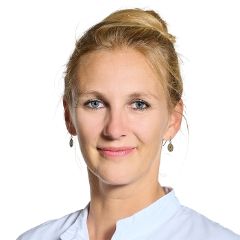
Interdisziplinärer Schwerpunkt Sport- und Bewegungsmedizin (SEMS)

Show profile

Our team

161f7797-f18c-4ac6-a455-beafc667d7c6

Dr. Ursula Gobrecht-Keller

Leitung RME a.i. (ad interim)

Frauenklinik

Show profile

efbf0ab6-9245-4e9a-912b-f75edc9181a6

Dr. Manuel Fischer

Laborleiter

Reproduktionsmedizin und gynäkologische Endokrinologie

Show profile

b453a83b-82d3-46d4-b915-3dc5f45c979d

Christina Kettner

Leitung Pflege RME & GAF

Reproduktionsmedizin und gynäkologische Endokrinologie und Gynäkologisches Ambulatorium Frauenklinik

Show profile

16cd6656-4f18-46c0-9644-8bc992f81a01

Florije Gashi

Teamleiterin Administration

Reproduktionsmedizin und gynäkologische Endokrinologie
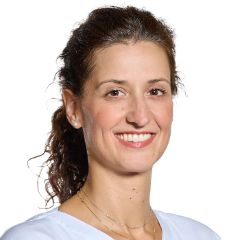
Show profile

c23d0074-b4e0-494b-a4a0-2a0c4df2ef7d

Dr. Maddalena Masciocchi

Kaderärztin

Frauenklinik

Show profile

Dr. Eva Maria Baumgartner-Sift

Oberärztin

gynäkologische Endokrinologie/Reproduktionsmedizin
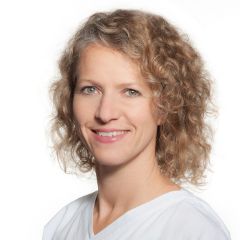
Show profile

b5e788b8-cfb9-4b62-ae39-f193d2194200

Dr. Giuseppina De Napoli

Oberärztin

Reproduktionsmedizin und gynäkologische Endokrinologie

Show profile

64420ad7-861d-470d-a1cd-fab3dd65ad1e

Dr. Bettina Dühsler

Oberärztin

Reproduktionsmedizin und gynäkologische Endokrinologie

Show profile

63e71c9f-13af-47e7-94f0-a1c94cc9f4cb

Dr. James Geiger

Oberarzt

Reproduktionsmedizin und gynäkologische Endokrinologie

Show profile

4f2bca40-9377-49a5-b023-e2f25b87bce9

Dr. Philipp Quaas

Oberarzt

Reproduktionsmedizin und gynäkologische Endokrinologie

Show profile

74354781-f738-4d5f-9abf-2661c0148217

Dr. Kyra Johanna von Horn

Oberärztin

Frauenklinik

Show profile

efbf0ab6-9245-4e9a-912b-f75edc9181a6

Dr. Manuel Fischer

Laborleiter

Reproduktionsmedizin und gynäkologische Endokrinologie

Show profile

306ab443-cbb9-44b9-8c54-49e3cf76a18d

Isabelle Bienz

Embryologin

Reproduktionsmedizin und gynäkologische Endokrinologie

Show profile

5a01777e-5575-4cc9-a6f3-07fb0854c9ba

Adeline Hirschler

Embryologin

Reproduktionsmedizin und gynäkologische Endokrinologie

Show profile

93ca30c9-3056-4feb-85ce-77b97a88ffe6

Fabiano Gunti

BMA

Reproduktionsmedizin und gynäkologische Endokrinologie

Show profile

f336855f-3b1b-46c4-98e2-c12dcb6d5f37

Nina Schick

BMA Reproduktionsmedizin und gynäkologische Endokrinologie

Show profile

f182c60d-a45e-47fd-957b-3951f02f796c

Andrea Baumgartner

Fachfrau Gesundheit

Reproduktionsmedizin und gynäkologische Endokrinologie

Show profile

Astou Diouf

MPA

Reproduktionsmedizin und gynäkologische Endokrinologie

Show profile

b453a83b-82d3-46d4-b915-3dc5f45c979d

Christina Kettner

Leitung Pflege RME & GAF

Reproduktionsmedizin und gynäkologische Endokrinologie und Gynäkologisches Ambulatorium Frauenklinik
Show profile

0f589701-cfd3-43f0-bc48-11e3a422d160

Anja Meyer

MPA

Reproduktionsmedizin und gynäkologische Endokrinologie

Show profile

0a94f738-155f-4ef2-a844-90546cb1b622

Evelyne Nagel

Pflegefachfrau

Reproduktionsmedizin und gynäkologische Endokrinologie

Show profile

33293287-733f-4684-b61a-b1079150292e

Lorenza Tinelli

Dipl. Pflegefachfrau

Reproduktionsmedizin und gynäkologische Endokrinologie

Show profile

24f6eac2-d19a-468c-bd10-e08d10e64679

Stefanie Unrau

Fachfrau Gesundheit

Reproduktionsmedizin und gynäkologische Endokrinologie

Show profile

5a01777e-5575-4cc9-a6f3-07fb0854c9ba

Adeline Hirschler

Embryologin

Reproduktionsmedizin und gynäkologische Endokrinologie

Show profile

2a52733e-904c-4dd7-b1e8-6d9b86688eb7

Dr. phil. Verena Ehrbar

Psychologin

Gynäkologische Psychosozialmedizin

Show profile

df06cac3-af71-430a-9bbd-7b6bf66461b1

Nüket Colak

Patientenadministration

Reproduktionsmedizin und gynäkologische Endokrinologie

Show profile

ac9a5246-c154-4a5b-aa6c-2f3abb584fb4

Donita Domaniki

Sekretärin

Frauenklinik

Sekretariat Dr. Gobrecht-Keller

Show profile

16cd6656-4f18-46c0-9644-8bc992f81a01

Florije Gashi

Teamleiterin Administration

Reproduktionsmedizin und gynäkologische Endokrinologie

Show profile

53129131-4864-4fd5-b09a-7c7df5aafbec

Melissa Tanja Kissling

Administrative Mitarbeiterin

Gyn.Endokrinol./Reproduktionsmedizin

Show profile

Lejla Ziberi

Kauffrau in Ausbildung

Gyn.Endokrinol./Reproduktionsmedizin

Show profile

Videos: Questions and answers about the desire to have children

Fertility FAQ: Dr. Alexander Quaas

Thematic week on the desire to have children FAQ: Dr. Ursula Gobrecht

Fertility FAQ theme week: Dr. Manuel Fischer

Thematic week on the desire to have children FAQ: Dr. phil. Verena Ehrbar

Fertility FAQ theme week: Dr. Maddalena Masciocchi

Fertility FAQ: Dr. Alexander Quaas

Thematic week on the desire to have children FAQ: Dr. Ursula Gobrecht

Fertility FAQ theme week: Dr. Manuel Fischer

Thematic week on the desire to have children FAQ: Dr. phil. Verena Ehrbar

Fertility FAQ theme week: Dr. Maddalena Masciocchi
FAQ Videos