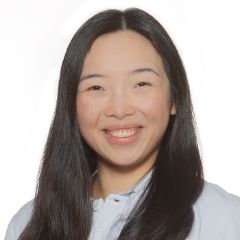
Gynecological-oncological outpatient clinic of the women's clinic
The gynecological-oncological outpatient clinic of the Women's Clinic is located on Spitalstrasse and offers you all-round support and care during your treatment.
We work in an interdisciplinary team to offer you the best treatment for you with the help of the latest research.
Gynecological-oncological outpatient clinic
Building B, 2nd floor
Spitalstrasse 21
4031 Basel
Monday to Friday
8.00-16.00
Contact:
41 61 265 93 33
Management

Prof. Viola Heinzelmann-Schwarz
Co-Leiterin Frauenklinik
Chefärztin Gynäkologie/Gyn. Onkologie
Head physician
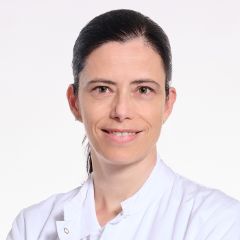
PD Dr. Céline Montavon Sartorius
Leitende Ärztin
Gyn. Onkologie, Leiterin Gynäkologisches Tumorzentrum
Your contact persons

Certification

Gynecological tumor diseases
There are various gynaecological tumors that can affect both the internal and external sexual characteristics of women. Some of these gynecological diseases occur predominantly in older women, while others can also develop in women of a younger age and are favored by hereditary predispositions, lifestyle and other factors.
We treat patients with the following tumor diseases:
- Ovarian or fallopian tube cancer (ovarian and tubal carcinoma)
- Cancer of the uterus (endometrial carcinoma)
- Cancer of the cervix (cervical carcinoma)
- Peritoneal cancer (peritoneal carcinoma)
- Vaginal cancer (vaginal carcinoma)
- Cancer of the vulva (vulvar carcinoma)
Chemotherapy
During chemotherapy, patients receive medication that inhibits the division of cancer cells and thus their growth. The medication is usually administered by infusion in a predefined number of cycles and at predefined intervals.
Chemotherapy can be used before an operation to shrink the tumor and thus improve the chances of success of the operation. After surgery and/or radiotherapy, chemotherapy is used to kill any remaining tumor. It can also be used for long-term aftercare and to improve quality of life.
Do you need chemotherapy? We will be happy to advise you and work out a suitable treatment plan with you.
You can find our contact details here.
Tumor aftercare
Aftercare is an important part of follow-up treatment, especially after a tumor disease. In addition to checking the current state of health, it is also an important part of your treatment in terms of early detection.
Taking your individual needs and wishes into account, we work together to develop a suitable aftercare plan for you.
Regular tumor aftercare takes place every 3 months for 2 years, then every 6 months up to 5 years and then annually up to 10 years. Patients are then discharged from tumor aftercare. Patients receive a follow-up care pass and are cared for jointly/alternately with the attending gynecologist, oncologist or family doctor whenever possible.
We will be happy to advise you and work with you to create a suitable aftercare plan for you!
You can find our contact details here.
Lynch syndrome
Patients with Lynch syndrome require comprehensive and individualized care.
individualized care. In our new Lynch consultation, we offer you
specialized care from a single source - interdisciplinary, personal and according to the
the state of the art in medicine.
Our services include
- Genetic counseling and testing in collaboration with the Clinic for
Medical Genetics
- Gynaecological check-ups, individually tailored to your
risk
- Planning and carrying out prophylactic operations if a gene mutation is detected
of a gene mutation
- Tumor follow-up care for existing cancer diagnosis after completed
therapy
- Individualized screening programs for early detection and prevention
Prevention in collaboration with the Clinic for Gastroenterology
- Psychosomatic support
Our aim is to offer you long-term security and guidance - through
close support, interdisciplinary cooperation and individually tailored
customized measures.
Talk to us - we will be happy to advise you.
Consultation hours take place during regular opening hours. Please contact us to make an appointment.
Management
Carcinosarcoma / Mullerian mixed tumor (MMMT)
Müllerian mixed tumors, also known as carcinosarcomas, are rare tumors that can develop in the uterus or ovaries. They consist of two different types of cells - so-called epithelial cells and connective tissue cells.
Thanks to modern diagnostics and specialized treatment options, we can now offer individually tailored treatment concepts based on the latest scientific findings.
Our focus
- Comprehensive diagnostics - through specialized imaging, blood sampling and tissue examinations
- Interdisciplinary treatment planning - in close cooperation with gynecological oncology, medical oncology, pathology and radiotherapy
- Surgery according to the latest standards - including removal of the uterus, ovaries and, if necessary, lymph nodes
- Aftercare and quality of life - we continue to follow you closely after treatment in our Gynecological Tumor Center
- Psychological and social support - because cancer always affects the whole person, not just the body
Our goal
We want to give you security, orientation and trust through holistic, empathetic care and experience with these rare diseases. Each treatment is individually tailored to your life situation and is based on the latest research findings.
Our team will support you with professional expertise, time and compassion - from diagnosis to aftercare.

We are happy to look after you from diagnosis to aftercare!
Management
Prof. Viola Heinzelmann-Schwarz
Co-Leiterin Frauenklinik
Chefärztin Gynäkologie/Gyn. Onkologie
Embryonal ovarian tumors (non-epithelial ovarian tumors)
Embryonal ovarian tumors, also known as non-epithelial ovarian tumors, are rare tumors that develop from the original germ cells or supporting tissue of the ovary. They account for around 10% of all malignant ovarian tumors and differ significantly from the more common epithelial tumors, which usually occur in women after the menopause.
These tumors are divided into two large groups:
- Germ cell tumors arise from the cells that normally give rise to oocytes
- Germline stromal tumors arise from the hormone-producing and supporting cells of the ovary
Germ cell tumors (GCT)
Germ cell tumors occur mainly in young women and adolescents - often before the age of 30.
Most of these tumors are unilateral and are discovered at an early stage.
Typical symptoms can be
- Drawing or pressing abdominal or pelvic pain
- A palpable swelling or mass in the lower abdomen
- Sometimes non-specific complaints such as a feeling of pressure or fullness
Diagnosis is based on imaging (e.g. ultrasound via the vagina) and tumor markers in the blood (AFP, β-hCG, LDH, inhibin B). These markers not only help with the diagnosis, but also with the assessment of progression during and after treatment.
Thanks to modern treatment concepts, the prognosis in the early stages is very good and fertility can be preserved.
Treatment is therefore usually carried out by means of an ovary-preserving operation (removal of only one ovary) - which is particularly important for young patients who wish to have children. If necessary, this can be followed by chemotherapy with proven, effective medication. If the therapy is carried out in specialized centers, fertility can be preserved in many cases.
SexChord Stromal Tumors (SCST)
These tumors develop from the hormone-producing or supporting cells of the ovary and can occur at any age. However, some subtypes occur more frequently in younger women, others in women around the menopause.
Typical symptoms are often caused by changes in hormone production, e.g:
- Changes in menstruation
- Increased body hair or skin changes
- At a young age: early signs of puberty
The diagnosis is made with the help of ultrasound examinations via the vagina, hormone analyses (e.g. inhibin B, estradiol, testosterone) and tissue examinations.
As with germ cell tumors, fertility-preserving surgery can usually be performed. For women who have already completed their family planning, a more extensive operation may be recommended.
Therapy and aftercare
- Interdisciplinary treatment: we work very closely with gynecological oncologists, medical oncologists, hormone specialists (gynecological endocrinology), pediatricians and pathologists.
- Fertility preservation: if medically possible, the focus is on preserving the uterus and healthy ovaries, for which we work together with the Department of Reproductive Medicine and Gynecological Endocrinology at the Women's Clinic.
- Individual chemotherapy: this is specifically tailored to your tumor type and the extent of the tumor.
- Regular and comprehensive follow-up care: to monitor tumor markers, hormones and imaging findings and, if necessary, additional surgery after family planning has been completed, you will always be monitored by the same colleagues at the Gyn. Tumor Center. This allows a personal relationship of trust to be established.
Thanks to modern therapies and careful aftercare, most patients today have an excellent chance of recovery at an early stage and can lead a healthy, active life - often with preserved fertility.
Research and progress
Since MMMTs and embryonal tumors of the ovary are very rare, we work closely with international research networks and study centers to develop new diagnostic methods for early detection and to continuously improve treatment.
We are also conducting intensive research to better understand the development and genetic background to the development of these rare gynecological carcinomas.
New findings should help to develop targeted therapies, further reduce side effects and make treatment even more individualized. As a result, patients benefit directly from innovative therapeutic approaches and state-of-the-art medical technology.
Management
Prof. Viola Heinzelmann-Schwarz
Co-Leiterin Frauenklinik
Chefärztin Gynäkologie/Gyn. Onkologie
Do you have any questions? We will be happy to assist and advise you!

Genetic counseling
Genetic counseling is a special consultation for the early detection and prevention of breast cancer or ovarian cancer. This can be particularly helpful if close relatives of yours have already been diagnosed with one of these forms of cancer.
Are you interested in genetic counseling or do you have questions about our services? We are here for you!
Management
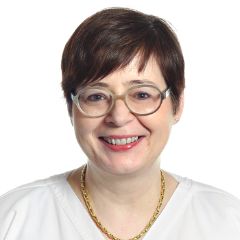
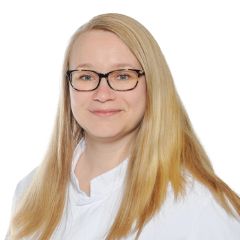
Complementary medicine
In a one-to-one consultation, we specifically address your personal needs and wishes and create an individual, holistic treatment concept together. In doing so, we focus on helping to shape the healing process, activating your self-healing powers and immune system and improving your quality of life. When choosing complementary methods, we pay particular attention to possible interactions with conventional medicine.
Our focus is on the following areas:
- Acupuncture
- Traditional Chinese medicine
- Hypnotherapy / Mind-Body Medicine / Order Therapy
- Nutrition and exercise therapy
- yoga
- Energetic massage and aromatherapy
Are you interested in complementary medical treatment or do you have any questions about our services? Talk to us, we will be happy to advise you!
You can also find more information in our flyer.
Management